Enterprise Learning Strategy
FlagshipIn testing & validationFrom Completion to Capability
Designing a measurement and assessment system for performance readiness
- Company
- Intuit
- My role
- Learning Strategy & Measurement Architect
- Status
- Testing and validation in progress
- Enterprise Learning Strategy
- Capability & Performance
- Operating Models & Governance
Context
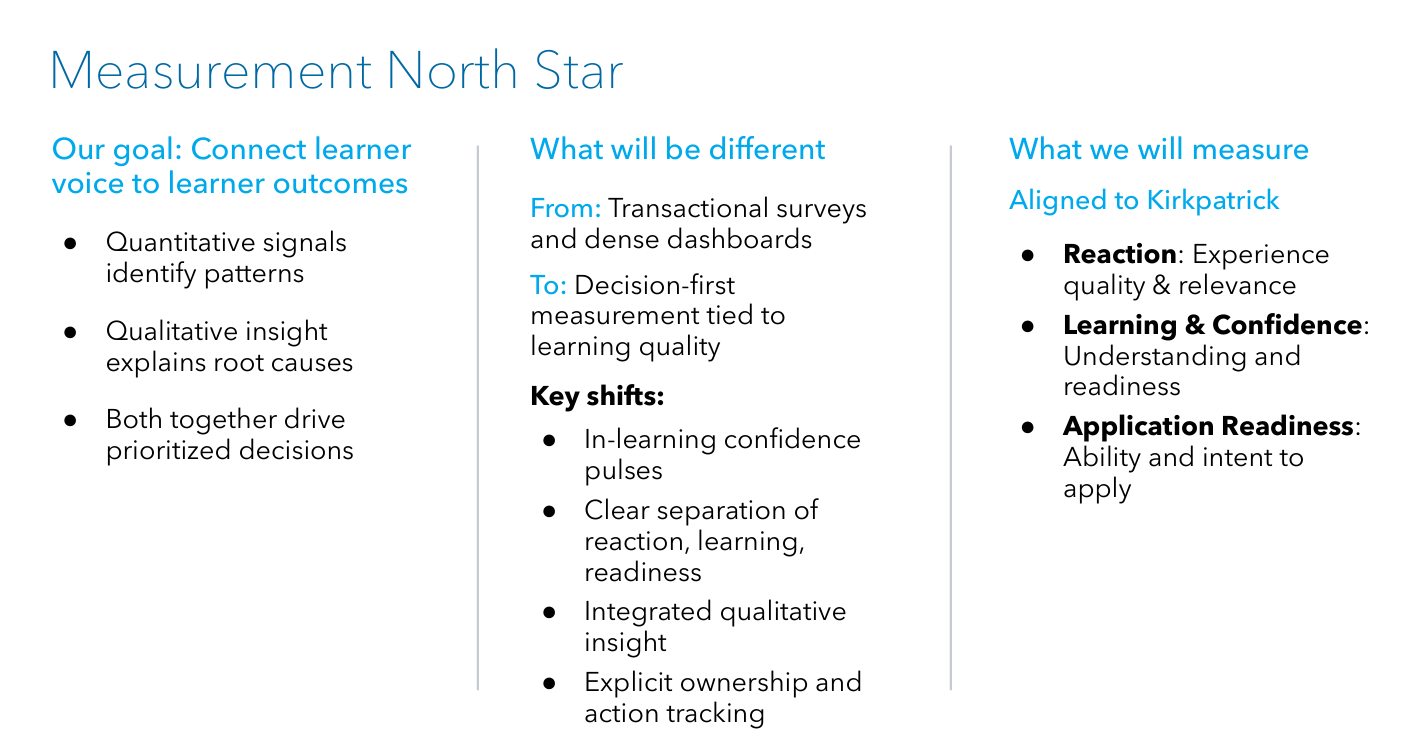
Moving learning measurement beyond completion and learner sentiment toward evidence of capability and readiness.
Traditional measures provided useful information about participation and learner response, but the opportunity was to build a stronger connection between learning signals, demonstrated capability, readiness, and performance.
The Challenge
Traditional learning metrics could show whether learners completed training or how they felt about the experience, but they could not reliably answer the questions that mattered most:
- Can learners perform?
- Where are they struggling?
- Are they ready to apply the skills independently?
- What should happen when they are not ready?
- How should learning data inform decisions?
The opportunity was larger than improving a survey or assessment. It was to rethink how learning measurement, assessment, confidence, practice, and readiness could work together as a system.
My Role
I developed the learning measurement and assessment strategy, connecting learner confidence, demonstrated competence, readiness decisions, remediation, and longer-term performance signals.
My work included
- Defining the future-state measurement strategy
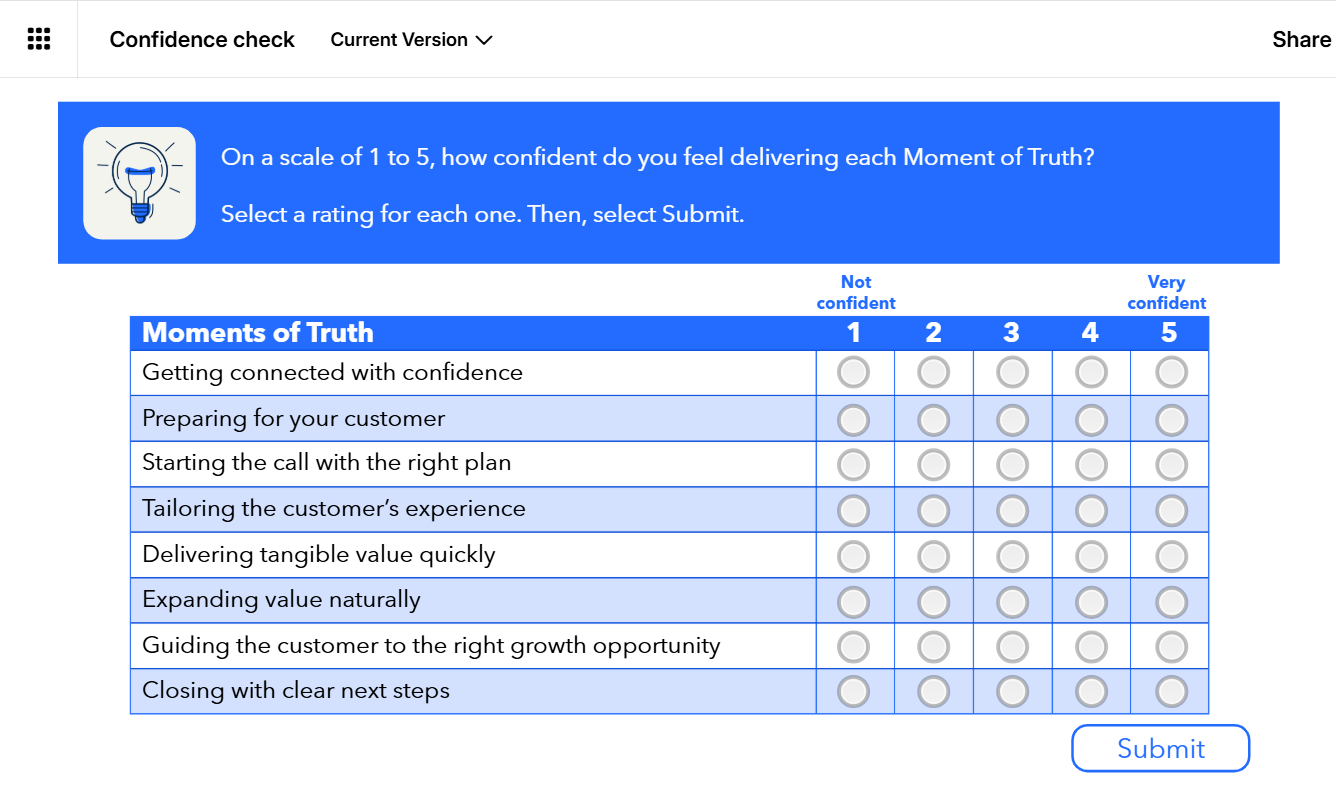
- Designing confidence and capability measurement
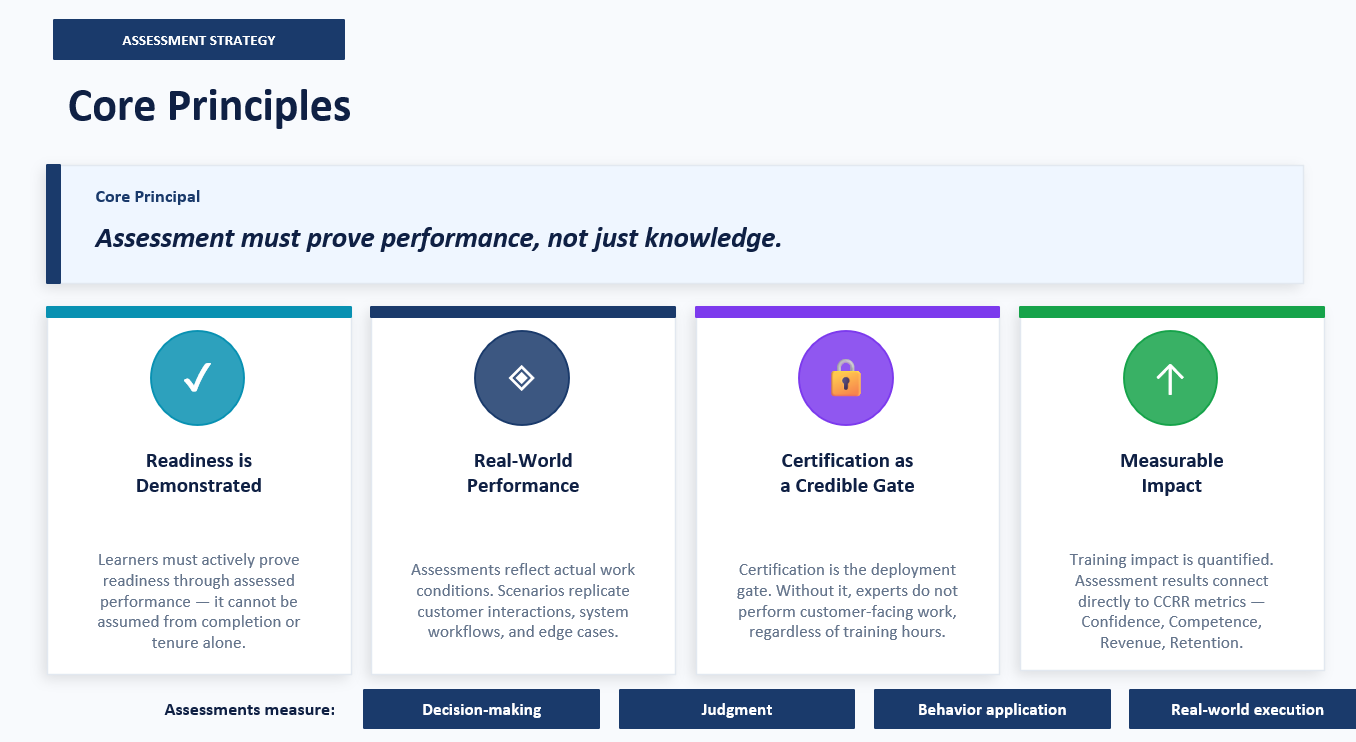
- Establishing principles for scenario-based assessment and simulated practice
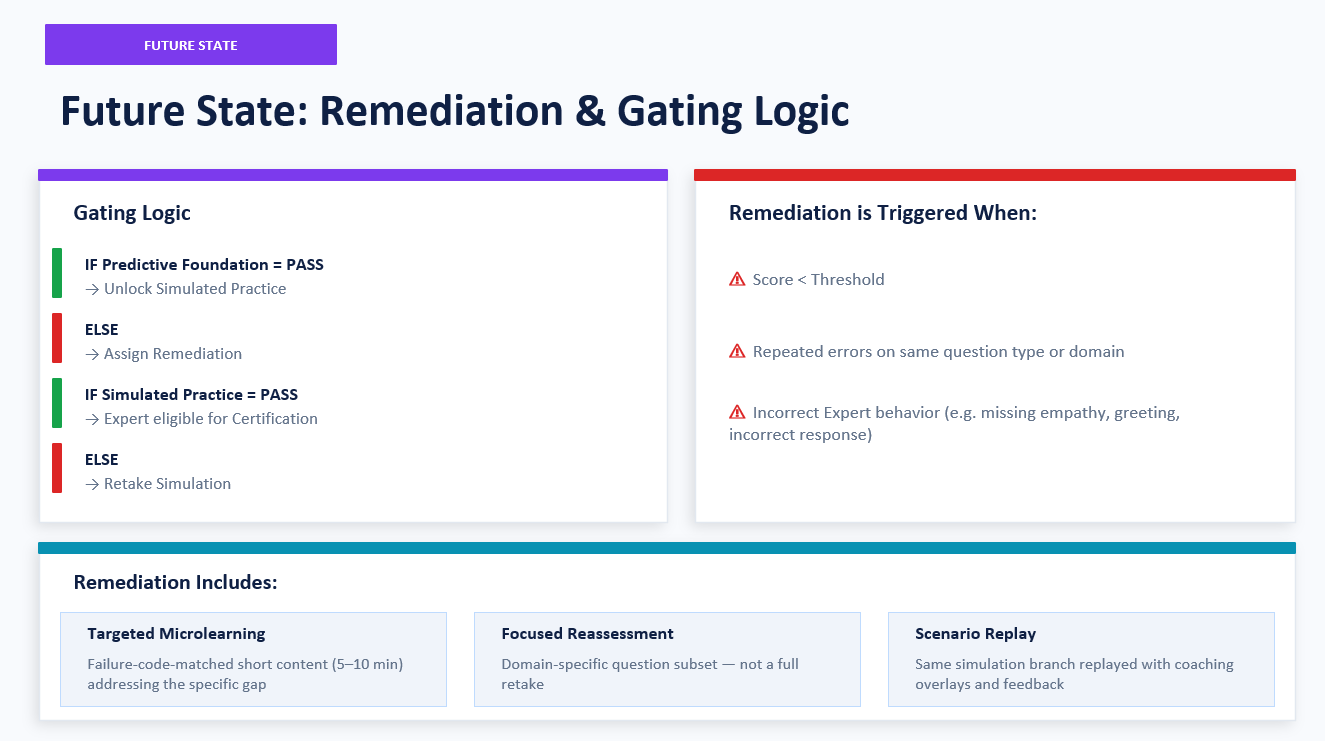
- Connecting assessment results to remediation and readiness decisions
- Partnering with Platform and Data Science teams to test and refine the approach
The Approach
From
- Completion as evidence
- End-of-course feedback
- Learner sentiment
- Assessment scores
- Knowledge checks
- Generic remediation
- Course completion
- Training metrics
- Measurement as reporting
To
- Demonstrated readiness
- Measurement throughout learning
- Confidence + competence
- Diagnostic performance signals
- Scenario-based assessment
- Gap-specific intervention
- Readiness decisions
- Learning + performance signals
- Measurement as a decision system
The goal was not to collect more learning data. It was to make the data more useful for decisions.
The Solution
Measurement system
- 01
Measure
Capture confidence, learning, practice, and readiness signals at meaningful points in the experience.
- 02
Diagnose
Use assessment and behavioral signals to identify where learners struggle and what may be causing the gap.
- 03
Validate
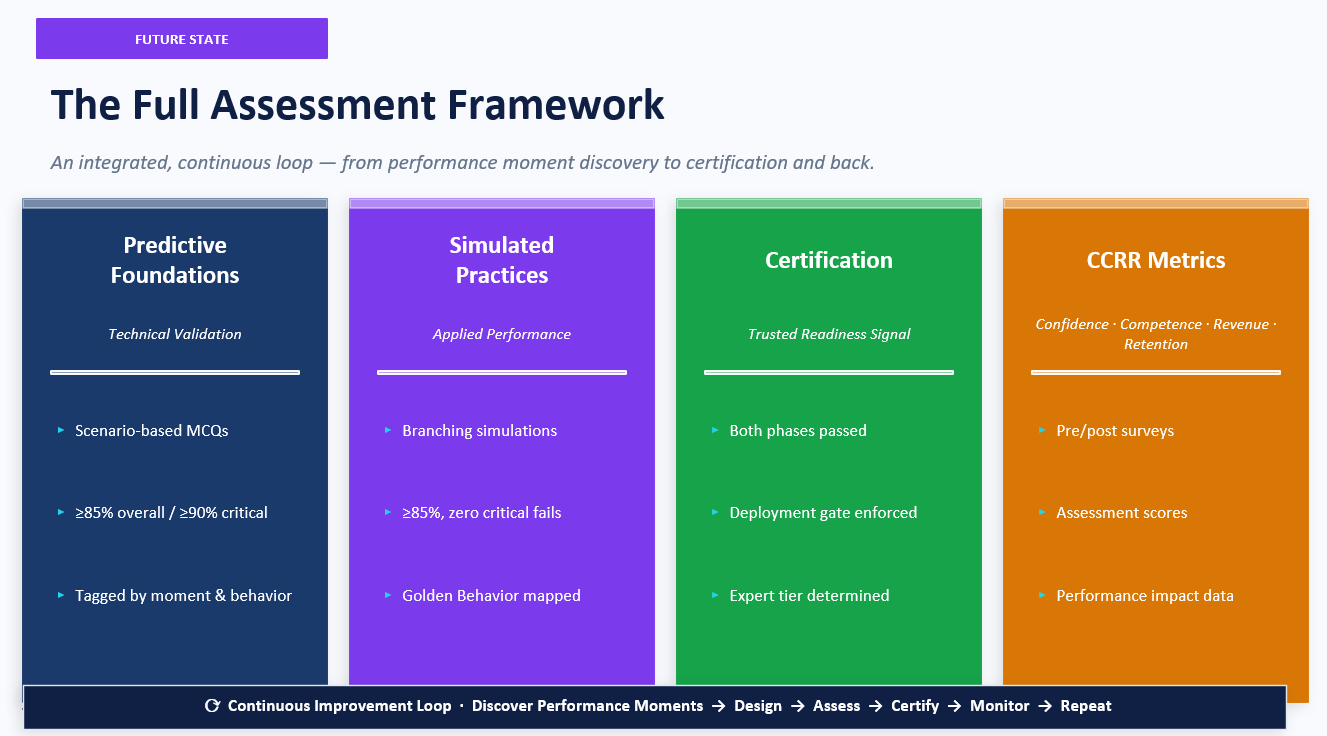
Move beyond recall through scenario-based assessment and simulated practice that requires learners to apply judgment.
- 04
Certify
Use demonstrated capability—not completion alone—to inform readiness and progression decisions.
- 05
Improve
Feed confidence, assessment, application, and performance signals back into learning design and continuous improvement.
“Assessment must prove performance, not just knowledge.”
Visual Evidence
Curated artifacts
Testing & Validation
The strategy is currently being tested and refined in partnership with Platform and Data Science teams. The work is focused on determining how confidence, assessment, readiness, and performance signals can work together to support better learning and business decisions.
Areas being tested
- Confidence + Competence
Do confidence signals paired with performance show readiness?
Test whether confidence signals, when paired with demonstrated performance, provide a stronger view of learner readiness.
- Diagnostic Value
Can assessment patterns pinpoint capability gaps?
Evaluate whether assessment patterns can identify specific capability gaps and support more targeted intervention.
- Readiness Decisions
Can demonstrated capability inform progression?
Explore how demonstrated capability can inform progression and readiness rather than relying primarily on completion.
- Measurement at Scale
How can these signals be integrated at scale?
Determine how learning, assessment, and performance signals can be integrated into a scalable measurement approach.
What This Demonstrates
- Enterprise Learning Strategy
- Learning Measurement Strategy
- Capability & Performance
- Assessment Architecture
- Systems Thinking
- Operating Models & Governance
- Performance Consulting
“Learning should create capability, not just completion.”