Performance Enablement
FeaturedDeliveredPractice Before the Pressure
Building confidence for a high-stakes customer moment
- Company
- Intuit
- My role
- Learning Strategy & Experience Design Lead
- Status
- Delivered
- Capability & Performance
- Learning & Capability Transformation
Context
Lifeline is an established Intuit initiative that enables employees to support TurboTax customers during a high-pressure filing period.
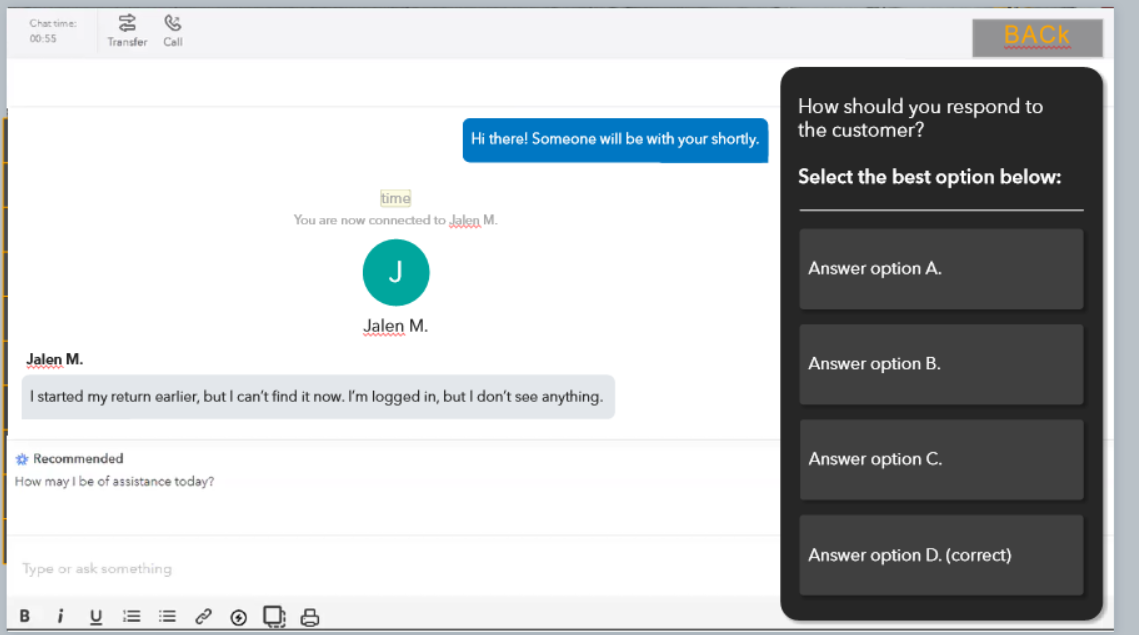
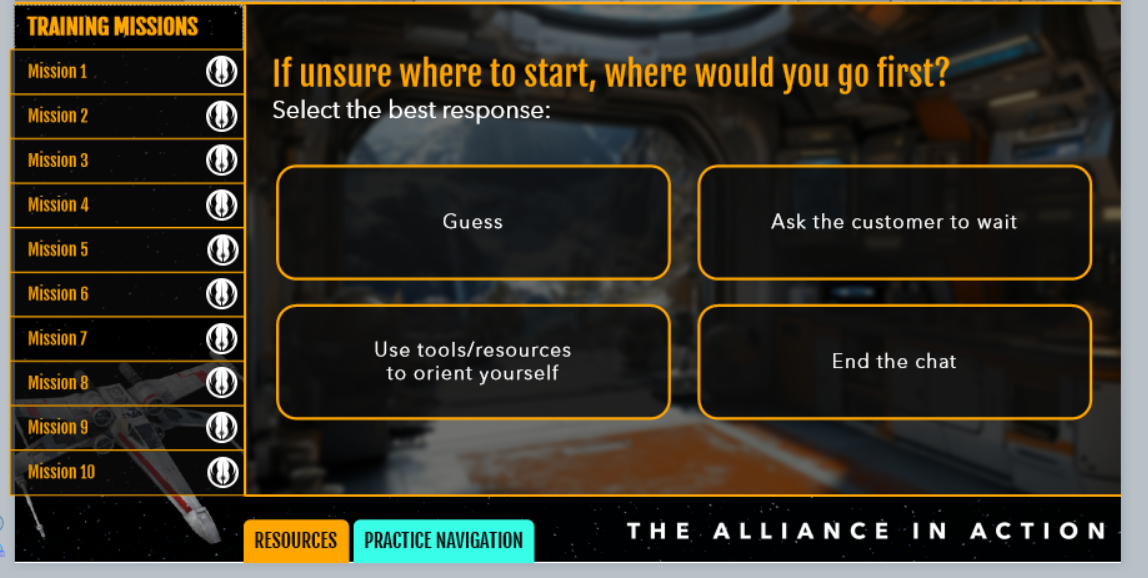
For TY25, the opportunity was to redesign the participant-readiness experience so employees could build confidence progressively, practice realistic decisions, use available tools and resources, recognize boundaries, and know when to continue assisting versus escalate.
At a glance
- Company: Intuit
- Category: Performance Enablement
- Role: Learning Strategy & Experience Design Lead
- Storyline 360 experience developed by my team from my strategy, design direction, and storyboards
The Challenge
The previous readiness experience concentrated learning into a single, approximately 60-minute linear session. This created significant cognitive load upfront and provided limited opportunity for participants to build confidence and demonstrate readiness over time.
The challenge was to move from one-time content delivery to a distributed practice model that better prepared participants for real customer interactions.
“How might we move from completing training to demonstrating readiness before the customer moment?”
My Role
I led the learning strategy and experience redesign for TY25, beginning with an analysis of the existing readiness model and defining the future-state learning journey.
I created the experience architecture, outline, storyboards, job aids, and decision-support tools; provided design direction to the team developing the Storyline 360 experience; and conducted end-to-end testing of the final solution.
I also supported participants during the live event and synthesized learner feedback and data from multiple sources to evaluate readiness and identify opportunities for improvement.
The Approach
Readiness model transformation
2024 — One-time training
- Single, linear experience
- Approximately 60 minutes in one sitting
- Heavy cognitive load upfront
- Learners consume content, then practice
- One-time confidence check
- Readiness inferred from completion
- Escalation rules implied
2025 — Distributed readiness
- 10-day microlearning journey
- 7–10 minutes per day
- Distributed, digestible learning
- Observe → Orient → Practice → Reflect
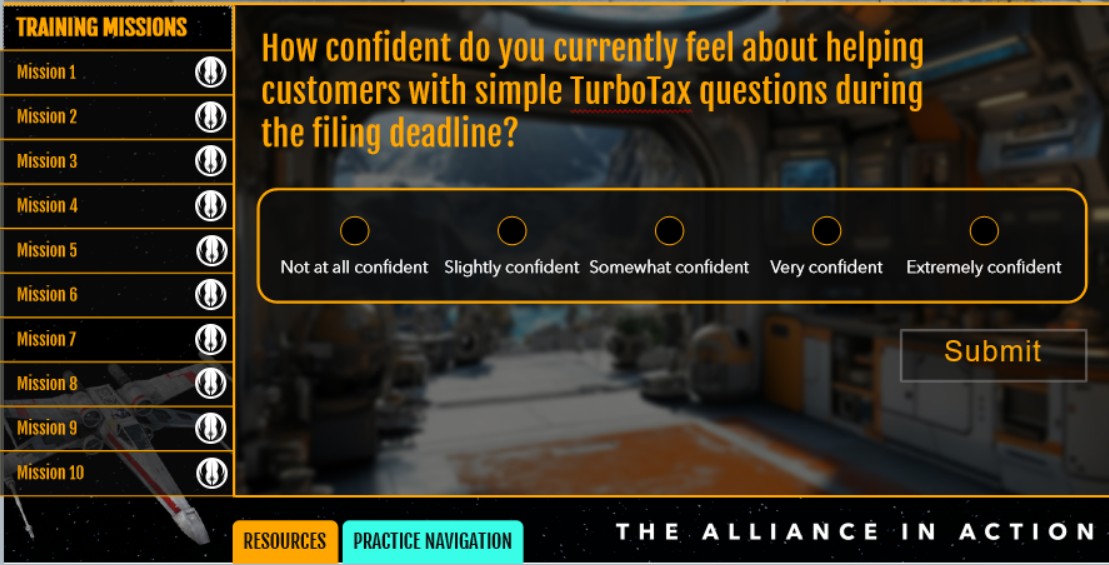
- Daily confidence pulses
- Readiness demonstrated through behavior
- Escalation clarity explicitly reinforced
Learning journey
- Orientation
- Practice
- Readiness
Escalation framework
- Pause & Assess
- Check Scope
- Use Available Resources
- Determine Whether Progress Is Blocked
- Escalate With Confidence
Live application & feedback: Supported participants during the live event, observed where additional support was needed, collected learner feedback, and synthesized data from multiple sources to evaluate readiness and inform improvements.
The Solution
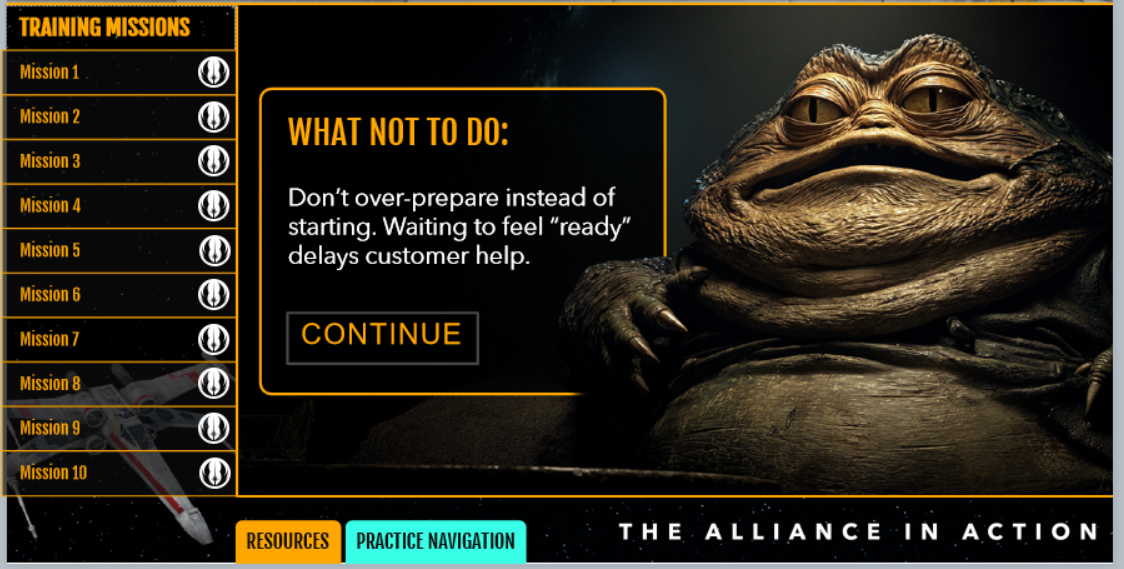
The solution combined a ten-mission Storyline 360 practice experience with job aids and decision-support tools designed to help participants move from orientation to realistic practice to live-event readiness.
Visual evidence
Evidence / Outcome
Post-experience learner feedback and readiness data provided multiple signals of participant preparedness.
Readiness & learner feedback
- Felt somewhat or very prepared
- 85.14%Felt somewhat or very prepared
- Reported being much more or very confident
- 76.57%Reported being much more or very confident
- Understood when to continue assisting versus escalate
- 95%+Understood when to continue assisting versus escalate
- Reported comfort with Smart Snippets
- 84%Reported comfort with Smart Snippets
- Reported comfort with Intuit Assist
- 82.29%Reported comfort with Intuit Assist
What This Demonstrates
Performance-first learning strategy
Designed backward from what participants needed to do during live customer interactions.
Practice-based experience design
Moved participants from orientation through realistic decision practice to readiness.
Performance support & decision tools
Extended learning beyond the course with resources supporting real-time decisions.
Measurement & continuous improvement
Combined learner feedback, readiness data, and live-event observations to evaluate the experience and identify improvements.